
What Are the Main Types of Renewable Energy?
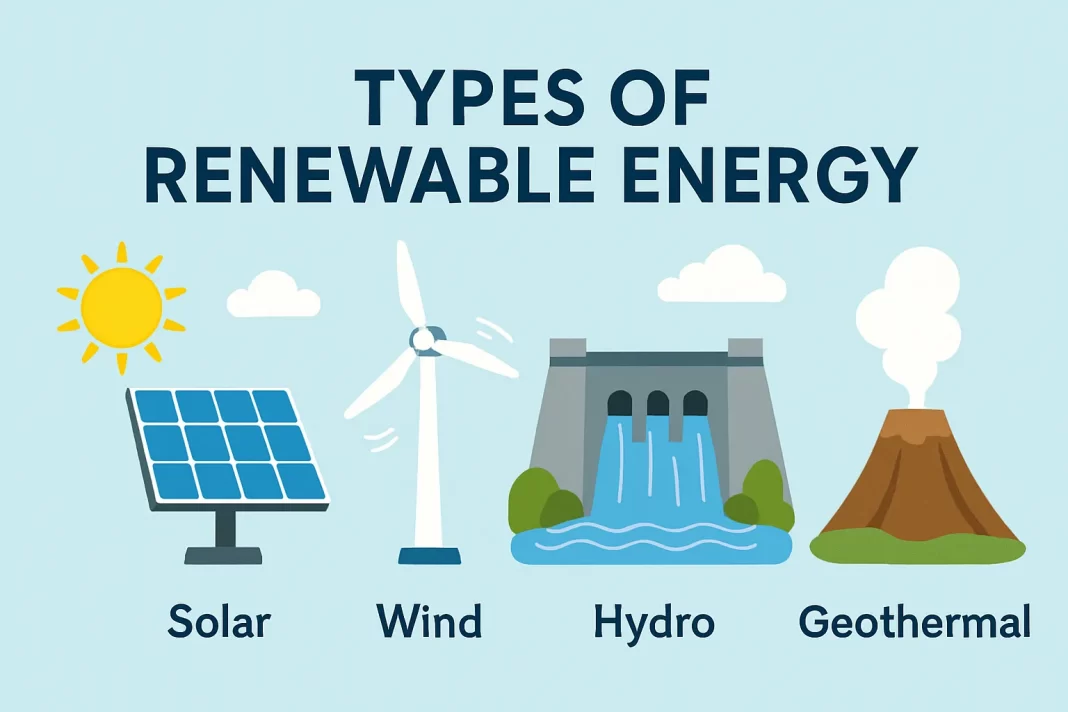
Renewable energy comes from natural sources that are constantly replenished, making it a sustainable alternative to fossil fuels. The main types of renewable energy include solar, wind, hydroelectric, geothermal, and biomass energy. Each type harnesses energy from different natural processes, offering diverse applications and benefits.
Solar energy captures sunlight using photovoltaic cells or solar thermal systems to generate electricity or heat. It is widely used in residential, commercial, and industrial settings due to its scalability and decreasing costs. Solar power is particularly effective in areas with abundant sunlight.
Wind energy utilizes the kinetic energy from wind through turbines to produce electricity. Wind farms can be located onshore or offshore and have become one of the fastest-growing renewable energy sources globally. Wind power is especially efficient in open plains and coastal regions.
Hydroelectric energy generates power by harnessing the flow of water, typically through dams or river systems. It is one of the oldest and most established renewable energy sources, providing a significant portion of the world’s electricity. Other types include geothermal energy, which uses heat from the Earth’s core, and biomass energy, derived from organic materials like plants and waste.
Solar Energy: Harnessing the Power of the Sun
Solar energy is a renewable and sustainable source of power that captures sunlight and converts it into electricity or heat. By harnessing the power of the sun, solar technology provides a clean alternative to fossil fuels, reducing greenhouse gas emissions and dependence on non-renewable resources. This energy source is abundant and available worldwide, making it a key player in the global transition toward greener energy solutions.
The primary method of capturing solar energy involves photovoltaic (PV) panels, which use semiconductor materials to convert sunlight directly into electricity. These panels can be installed on rooftops, open fields, or integrated into building materials, offering versatile options for residential, commercial, and industrial applications. Additionally, solar thermal systems concentrate sunlight to generate heat for water heating or industrial processes.
Advantages of solar energy include:
- Reduction of electricity bills through self-generated power.
- Low maintenance costs once installed.
- Scalability from small-scale home systems to large solar farms.
- Minimal environmental impact during operation.
As technology advances, innovations such as improved solar panel efficiency and energy storage solutions continue to enhance the viability and accessibility of solar energy. These developments contribute to making solar power a cornerstone in sustainable energy strategies worldwide.
Wind Energy: How Wind Turbines Generate Clean Power
La energía eólica se basa en la conversión del viento en electricidad mediante aerogeneradores o turbinas eólicas. Estas turbinas capturan la energía cinética del viento con sus grandes palas giratorias, que están conectadas a un rotor. Cuando el viento sopla, mueve las palas, haciendo girar el rotor que a su vez impulsa un generador eléctrico para producir energía limpia y renovable.
El proceso comienza cuando el viento hace girar las palas, cuyo movimiento rotatorio se transmite a través de un eje hacia un generador situado en la góndola de la turbina. Este generador convierte la energía mecánica en energía eléctrica mediante inducción electromagnética. La electricidad generada es luego transportada a través de cables hacia la red eléctrica para su distribución y uso.
Las ventajas principales de la energía eólica incluyen:
- Producción de electricidad sin emisiones contaminantes.
- Uso de un recurso renovable e inagotable.
- Bajo costo operativo tras la instalación inicial.
Además, las turbinas modernas están diseñadas para maximizar la captación del viento incluso a bajas velocidades, aumentando así la eficiencia y contribuyendo significativamente a la generación de energía sostenible a nivel global.
Hydropower: Using Water to Produce Renewable Electricity
Hydropower is a form of renewable energy that harnesses the natural flow of water to generate electricity. By converting the kinetic energy of moving water into mechanical energy, hydropower plants produce clean and sustainable power without emitting greenhouse gases. This method leverages rivers, dams, and waterfalls to drive turbines connected to generators.
The most common type of hydropower facility is the hydroelectric dam, which stores water in a reservoir. When released, the water flows through turbines, spinning them to produce electricity. Run-of-the-river systems, on the other hand, utilize the natural flow of rivers without large reservoirs, minimizing environmental impact.
Advantages of hydropower include its reliability, as water flow can be controlled and stored, providing a consistent energy supply. Additionally, hydropower plants have long lifespans and low operating costs once constructed. This renewable energy source plays a crucial role in reducing dependence on fossil fuels and supporting global efforts toward sustainable energy development.
Other Types of Renewable Energy: Biomass, Geothermal, and More
Además de la energía solar y eólica, existen otros tipos importantes de energías renovables que contribuyen significativamente a la diversificación del mix energético global. La biomasa es una fuente de energía que proviene de materia orgánica, como residuos agrícolas, forestales y desechos urbanos. Su uso permite generar electricidad, calor y biocombustibles, ayudando a reducir la dependencia de combustibles fósiles y aprovechando recursos que, de otro modo, serían desechados.
La energía geotérmica aprovecha el calor almacenado bajo la superficie terrestre para producir electricidad y calefacción. Esta fuente de energía es especialmente útil en regiones con actividad volcánica o geotérmica significativa, donde la extracción de calor es más eficiente. La geotermia se destaca por ser una fuente constante y estable, a diferencia de otras renovables que dependen de condiciones climáticas variables.
Otras formas de energía renovable incluyen la energía hidroeléctrica de pequeña escala, que utiliza corrientes de agua para generar electricidad sin la necesidad de grandes presas, y la energía de las olas y mareas, que aún están en desarrollo pero presentan un gran potencial para el futuro. Estas tecnologías complementan el panorama energético renovable, ofreciendo alternativas sostenibles adaptadas a distintas condiciones geográficas y necesidades energéticas.